
High-Throughput Cell Counting, Now Fully Automated

What if cell counting no longer had to interrupt your workflow?
In many laboratories, cell counting is a routine but time-consuming step. When only a few samples are involved, it may feel manageable. However, as the number of samples increases, counting can quickly become more than a simple check. It can become a bottleneck that slows down the entire experimental workflow.
This is where a fully automated cell counter becomes valuable.
What Is a Fully Automated Cell Counter?
A fully automated cell counter is an automated cell counting system designed to reduce user intervention during the cell counting process. After samples are prepared and loaded, the instrument can automatically perform key steps such as sample mixing, counting, analysis, and result generation.
Unlike manual counting or any counting methods that are not high-throughput, a fully automated cell counter is especially useful for those who need to count many samples repeatedly and consistently. The main benefit is not only faster counting, but also reduced hands-on time.
In other words, users do not need to stay in front of the instrument throughout the entire counting process. While the instrument is running, they can continue with other laboratory tasks, such as cell culture, sample preparation, media change, reagent setup, or preparation for the next experiment.
Key Benefits of a Fully Automated Cell Counter
1. Reduced Hands-On Time
One of the most important benefits of a fully automated cell counter is reduced time.
Cell counting does not only involve the actual counting step. It also includes sample preparation, loading, focusing, analysis, result checking, and data organization. When these steps are repeated across many samples, they can consume a large portion of the user’s time.
By automating key parts of the process, a fully automated cell counter helps users spend less time on repetitive counting tasks and more time on other experimental work.
2. Improved Workflow Efficiency
In cell culture and cell-based assays, timing is important. Users often need cell counting results before they can proceed with seeding, transfection, treatment, or assay setup.
If counting takes too long, the next step may be delayed. This can be especially inconvenient when working with multiple samples or time-sensitive workflows.
A fully automated cell counter helps streamline this process by allowing multiple samples to be processed more efficiently. This can help maintain a smoother workflow from sample preparation to downstream experiments.
3. Result Consistency
Consistency is important in repeated experiments and comparative studies. When different users count cells, results may vary depending on experience, judgment, pipetting technique, and counting criteria. Even when the same person performs the counting, human error can still occur, especially when many samples are counted repeatedly.
A fully automated cell counter helps improve consistency by applying the same analysis conditions across samples. Depending on the instrument design, automated steps such as mixing, sample loading, imaging, and analysis can also help reduce variation caused by manual handling.
This is especially useful when comparing different experimental groups or when performing repeated cell counting under the same conditions.
4. High-Throughput Cell Counting Capability
A fully automated cell counter is especially useful when many samples need to be counted in a short period of time.
For laboratories that routinely process multiple samples, high-throughput cell counting can reduce counting time and improve productivity. This is one of the main reasons why users may consider investing in a fully automated cell counting system instead of relying only on manual counting or non-high-throughput automated counters.
Fully Automated Cell Counter vs. Manual Counting vs. Single-Sample Automated Counter
Different counting methods may be suitable depending on the number of samples, workflow, and budget. Manual counting can be useful for simple or occasional counting, but it requires more hands-on time and depends heavily on user skill.
A non-high-throughput automated cell counter can provide faster results than manual counting, but users may still need to load and measure each sample individually.
A fully automated cell counter is most valuable when users need to process multiple samples repeatedly and want to reduce hands-on time as much as possible.
Counting Method | Best For | Main Advantage | Main Limitation |
Manual counting | Occasional or low-volume counting | Low initial cost | Time-consuming and user-dependent |
Non-high-throughput automated cell counter | Quick counting of individual samples | Faster and more accurate than manual counting | The user still handles samples for each count |
Fully automated cell counter | High-throughput and repeated counting | Reduced hands-on time and improved workflow efficiency | Higher initial cost and consumable cost |
Who Needs a Fully Automated Cell Counter?
A fully automated cell counter is especially suitable for users who:
Count many samples repeatedly
Want to reduce hands-on time during routine cell counting
Need more consistent results across users or experiments
Want to automate repetitive counting steps
Perform high-throughput cell counting in daily lab workflows
For these users, the value of a fully automated cell counter extends beyond counting speed. The greater value comes from workflow automation, reduced manual workload, and improved consistency.
When May a Fully Automated Cell Counter Be Less Necessary?
A fully automated cell counter may not be necessary for every laboratory.
If a lab only occasionally counts a few samples, the benefits may not be noticeable. In this case, manual counting or a basic automated cell counter may be sufficient.
The initial cost and consumable cost should also be considered. A fully automated system provides the most value when it is used frequently.
In addition, automated instruments are still affected by sample quality. Factors such as cell clumps, debris, inappropriate concentration range, and staining conditions can affect counting results. Therefore, proper sample preparation is still essential.
Is a Fully Automated Cell Counter Worth the Investment?
A fully automated cell counter is worth considering when cell counting takes too much time, interrupts other laboratory tasks, or creates variation between users.
The instrument does not simply count cells on behalf of the user. It helps automate a repetitive workflow so users can focus on more important experimental tasks.
For laboratories that handle many samples, perform cell counting frequently, and need to maintain an efficient workflow, a fully automated cell counter can provide clear practical benefits.
It can help users save time, reduce hands-on work, improve consistency, and make high-throughput cell counting easier to manage.
Conclusion
A fully automated cell counter is more than just an instrument for counting cells. It is a workflow solution designed to support high-throughput cell counting, reduce user intervention, and improve daily laboratory efficiency.
If cell counting has become a bottleneck in your workflow, a fully automated cell counter may be the solution that helps you save time, improve consistency, and keep your experiments moving forward.
NanoEntek now proudly presents the new fully automated cell counter, EVE™ HT A26.
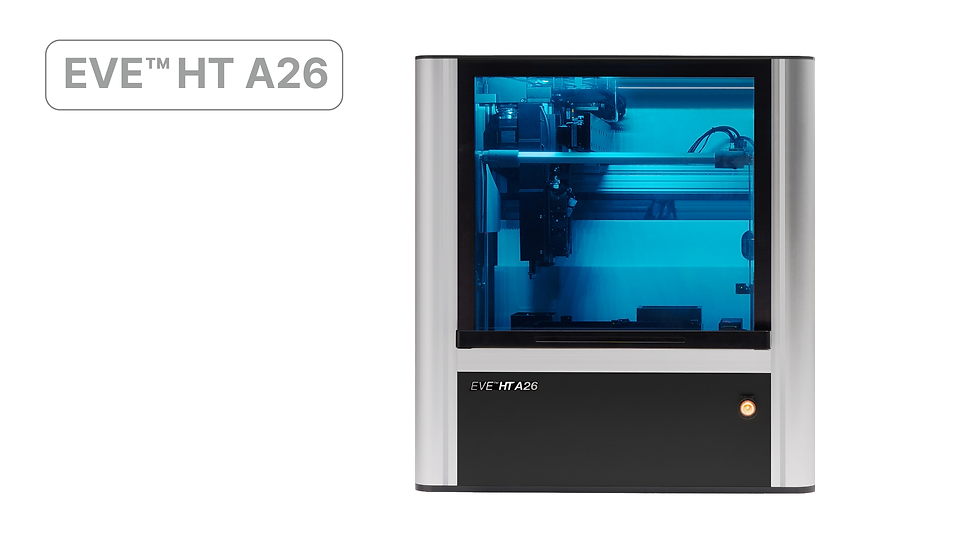
EVE™ HT A26 is a fully automated cell counter that simplifies the entire workflow, from sample preparation to cell counting and analysis. With high-throughput performance, it helps minimize workflow variability and ensure reliable, reproducible results.

KEY FEATURES & BENEFITS
- Hands-free processing
- 96 samples in 10 minutes
- 20 μL sample volume
- Dual fluorescence and brightfield channels
- Delivers consistent results across users
- Auto aliquoting & dilution available
Click HERE to learn more.


Comments